
Professor Larissa Naylor she/her
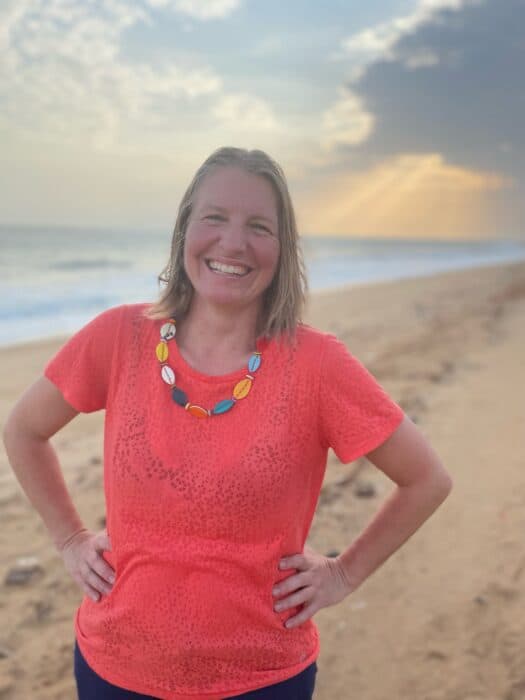
Professor of Geomorphology and Environmental Geography
Strategic Research Areas
My research passion lies at the science-policy-practice interface. I love finding solutions to aspects of the triple crises of planetary health, biodiversity/ecosystems and climate change. My entire research career has been working across interfaces, where mywork shapes academic debates as well as policy, planning and practice and in coastal and urban settings. My work is multi-award winning and I am globally renowned for her expertise and interests at the interface between geomorphology, ecology and engineering and coastal climate change risks, impacts, resilience and adaptation in Europe, Canada, Asia and West Africa.
I have provided expert advice on multiple coastal engineering projects on the use of nature-based solutions and ecological enhancement of grey infrastructure. These projects have been award winning. I co-led of a chapter in the first International guidelines on Natural and Nature-based Solutions (2021), led by the US Corps of Army Engineers. I was also an invited expert for the World Bank’s Inspection Panel, directly advising the Executive Board of the World Bank an invited expert to the Council of Europe’s Governance committee.
I would love to extend my interdisciplinary collaborations and research through DiveIN and to help with projects that are designed to tangible, practical benefits whether this is new ecoengineering products, or influencing policy and practice. I am excited about how we can use the scientific data we already have to make more climate resilient decisions in policy and practice. How can we harness big data to provide the evidence to help encourage politicians and practitioners to make more climate and ecosystem resilient decisions to improve our societal resilience in a rapidly changing world? How can the field of environmental economics better interface with engineering and other STEM subjects? How can we work across the science-policy-practice interface to solve global grand challenges? How can we accelerate the pace at which we are implementing practical adaptation actions to reduce societal risks to climate change hazards?
I am a very committed supervisor, with 20 years of experience of supervising inter- and transdisciplinary PhDs on a range of topics from ecoengineering, science-arts and design, environmental policy, biogeomorphology, climate change hazards and risks. My students have gone on to work in government agencies, as post-doctoral researchers, academics and others who have gone into industry/environmental consultancies.