
Building Better Research Records: DiveIn Researchers Explore Research Record-Keeping in Practice
By Jordan McInally, DiveIn CDT Events Coordinator
Effective research depends on more than good ideas and innovative methods. It also requires clear, accurate and accessible records that allow research to be understood, shared and reproduced. As part of DiveIn’s ongoing commitment to Trusted, Responsible and Open Research and Innovation (TRORI), members of the Kingfishers cohort recently took part in a workshop exploring the importance of research record-keeping across disciplines.
The session encouraged researchers to reflect on how they document, manage and safeguard their work throughout the research process. Discussions covered a wide range of approaches, from traditional lab books and experiment logs to version control systems, metadata management and digital record-keeping tools. Participants also explored the importance of documenting challenges, unexpected results and failed experiments, recognising that these can be just as valuable as successful outcomes in supporting transparent and reproducible research.
Learning from Industry Practice
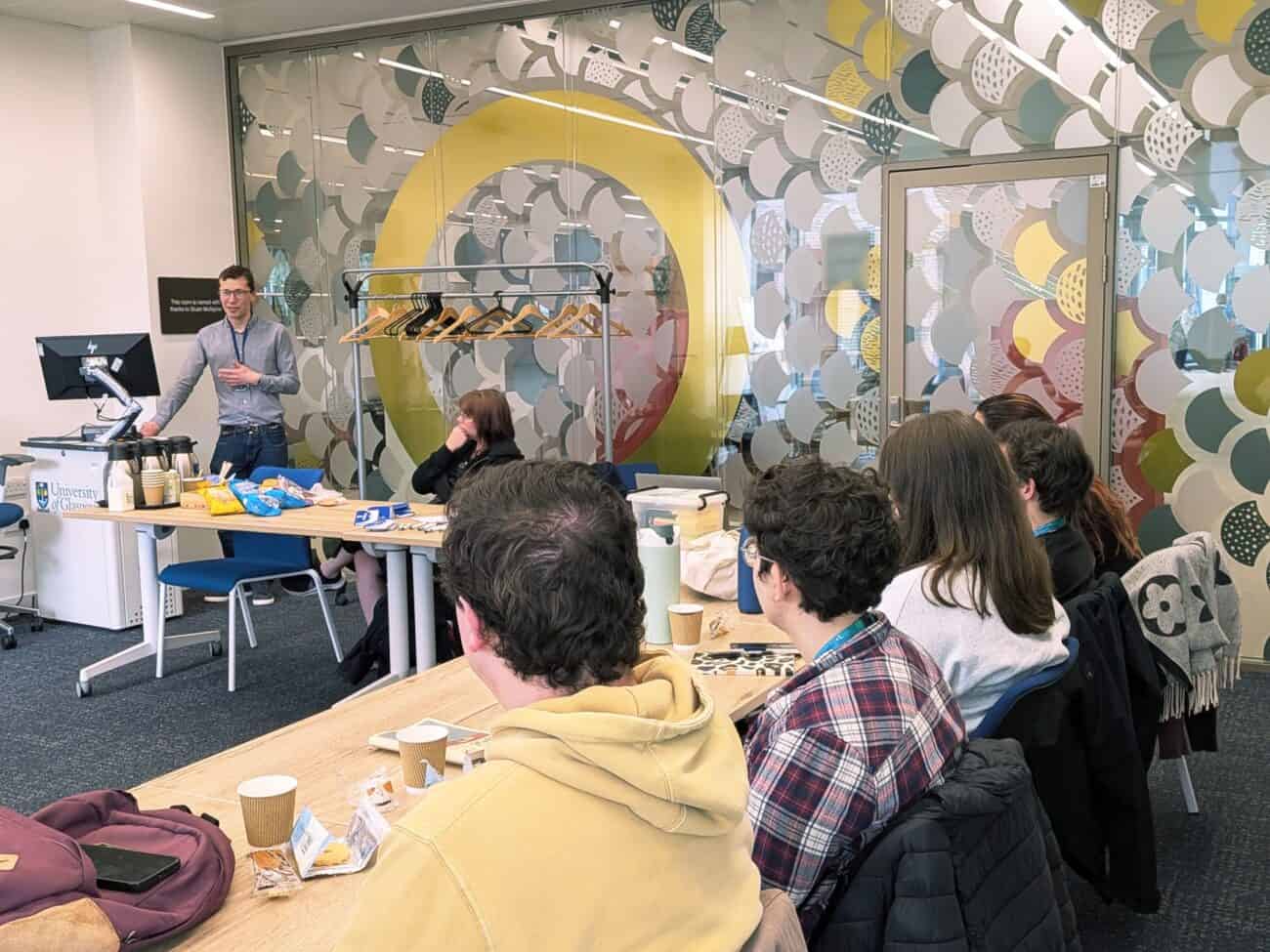
A highlight of the session was a guest contribution from Matthew Barrett of BioAscent, who shared insights into how Electronic Lab Notebooks (ELNs) are used within industry settings. By providing examples from professional research environments, Matthew demonstrated how robust record-keeping supports collaboration, accountability and knowledge sharing across teams.
His contribution offered researchers an opportunity to consider how the practices they develop during their doctoral studies align with those used beyond academia, and how good documentation can support both day-to-day research activities and long-term impact.
Reflecting on Research Practices
Following the industry perspective, Professor Caroline Gauchotte-Lindsay led an interactive workshop focused on reflection and improvement. Researchers were invited to examine their own record-keeping practices, discuss challenges they encounter in managing research information, and identify practical steps they could take to strengthen their approach.
Through discussion and collaborative activities, participants developed individual commitments to improve how they document their work, helping to embed good practice from the early stages of their research careers.