Dr Adetunmise Dada
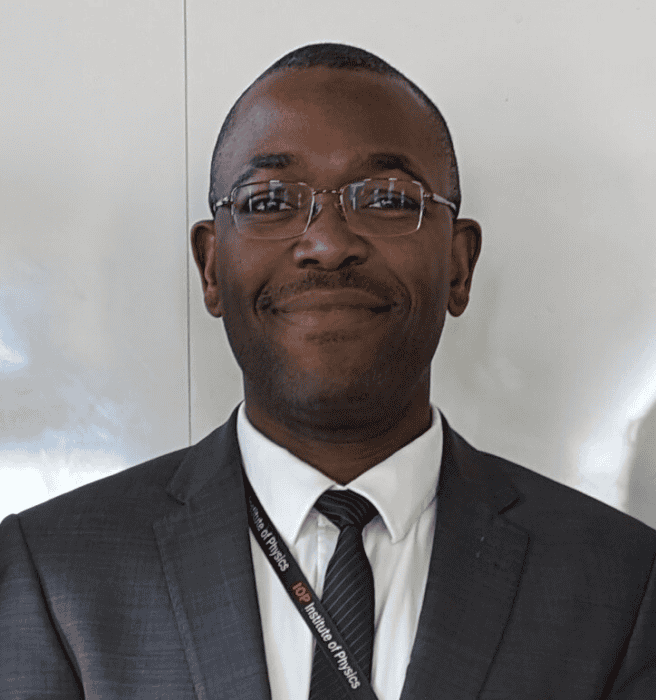
Senior Lecturer of Optics and Quantum Technology
Strategic Research Areas
I am fascinated by what becomes possible when we control light one photon at a time. As a Senior Lecturer at the University of Glasgow, I lead the Experimental Quantum Optics and Quantum Information Laboratory. My research explores quantum measurement and entanglement, and how we can use them for secure communication, computing and precision sensing.
Our group develops ways to generate, manipulate and measure quantum light. We work on high-dimensional quantum information, single-photon sources and photonic devices. These include metasurfaces: thin, patterned structures that allow us to control light in new ways. Our research combines experiments with modelling and numerical design, drawing on both physics and engineering.
Through DiveIn, I would like to work with colleagues in materials science, electronic engineering, computing and applied mathematics. Projects could involve developing compact optical devices, improving quantum measurements, or making technologies for secure communication and sensing more practical. I am interested in how a device works and what would make it useful beyond the laboratory. I would welcome students who bring ideas from other disciplines and want to take an active part in shaping their project.
As a supervisor, I aim to give students clear guidance and constructive feedback while helping them become increasingly independent. I encourage them to question assumptions, test their ideas carefully and talk openly about difficulties. My supervision experience spans Glasgow, Bristol and Heriot-Watt.
I want students from different backgrounds to feel welcome and confident in contributing to research. Making science accessible is also a large part of my work outside the university. I created and present The Science Show with Dr Dada on Jambo! Radio Scotland, sharing research with wider audiences, including communities underrepresented in STEM. The show received SAMEE’s Inspiring Diversity in STEM Award in 2023. These experiences have shaped my approach to inclusion: paying attention to the barriers people face and finding practical ways to address them.
Outside the laboratory, I compose and produce music. I enjoy creating something new, and that interest runs through both my music and my research. I also enjoy conversations that help people see science differently.