Dr Cate Anstöter she/her
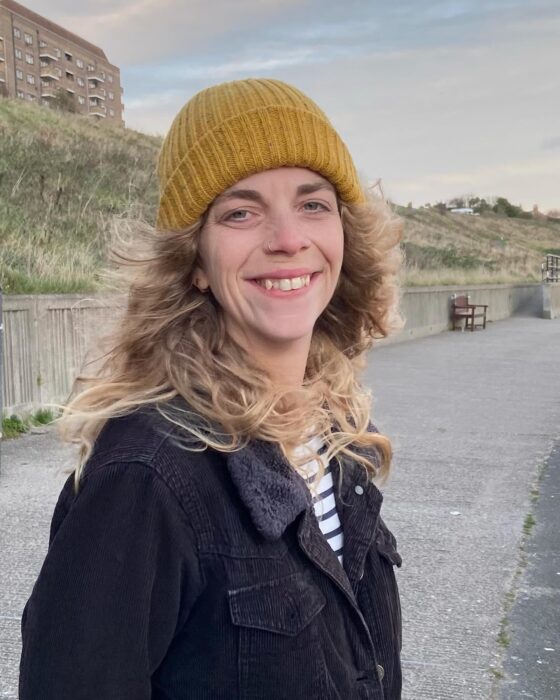
Lecturer in Physical Chemistry
Strategic Research Areas
My research asks what molecules do with light and with extra electrons. An electron that lands on a molecule may stay, fall off, or break a bond. These fleeting states matter in interstellar clouds, in radiation damage to DNA, and in organic electronics. I trained first as an experimental laser spectroscopist and then as a theorist. My group uses electronic structure theory, in close partnership with experiments, to understand excited and short-lived states. We also study aromaticity: how electrons circulate around rings, and how to use that to design molecules with new properties.
I collaborate across the UK, Europe and the US, with spectroscopists, synthetic chemists making new materials, mathematicians on graph theory and a biocatalysis group on how enzymes absorb light. I would like new links with laser and ultrafast physicists, astrophysicists, radiation biologists, materials engineers and data scientists.
Projects I could imagine include predicting how biomolecules are damaged by low-energy electrons, designing aromatic molecules that switch with charge or light, linking laboratory spectra to what telescopes see, or using machine learning to interpret complex spectra. I most enjoy projects where theory and measurement meet and the student shapes the question.
As a supervisor, I aim to build on the mentorship that shaped my own career. Mentors at each stage gave me room to cross from experiment into theory, backed my independence, and opened doors to collaborators. I want to offer my students the same. Masters students I supervised went on to PhDs in internationally recognised groups. A researcher I supervised from an astrobiology background now holds a PhD place in astrochemistry.
EDI matters to me personally. I have taken two periods of parental leave and have ongoing caring responsibilities, so I know how much flexibility matters. I chair the Virtual Winter School on Computational Chemistry. It is free and online to remove barriers of cost, location and caring duties, and has had over 1,600 registrations. I have contributed to Women in Photochemistry events, Pathways to Equity and I Belong in Chemistry. I was also awarded Chancellor’s Fund support for a co-creation project with widening participation schools, which launches next year.