
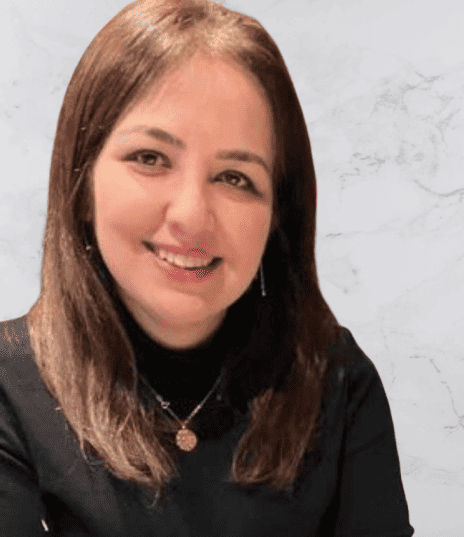
Dr Nazila Fough she/her
Enabling intelligent, resilient sensing, communication and autonomous monitoring in challenging marine and underwater environments.
Senior Lecturer
James Watt School of Engineering
Research interests:
Underwater Communications, Internet of Underwater Things, Intelligent Sensing, Artificial Intelligence, Underwater Networks, Autonomous Systems, Subsea Monitoring, Computer Vision, Remote Sensing, Resilient Communications
Research fields:
Underwater Communication Systems, Marine Robotics and Autonomous Systems, Subsea Sensing and Monitoring, Artificial Intelligence and Machine Learning, Computer Vision and Image Processing, Internet of Things, Remote Sensing and Earth Observation, Cyber-Physical Systems, Environmental Monitoring, Communication Network Security
Strategic Research Areas
Why do you want to join the DiveIn community?
I would like to join the DiveIn CDT community because I really value interdisciplinary research and the opportunity to work with people from different backgrounds. My own research sits across communications, sensing, AI and marine technologies, so I am used to working on problems that need input from more than one discipline.
What I particularly like about DiveIn is the way projects are developed through collaboration between students and supervisors, rather than being completely fixed from the start. I think this gives students more ownership of their research and also creates space for new ideas to develop.
I would also like to build new collaborations with colleagues in areas such as computing, robotics, environmental sciences, photonics and remote sensing. I see DiveIn as a very good environment for developing research that is both technically interesting and relevant to real-world challenges.
Personal profile:
My research is mainly focused on underwater and subsea communication, sensing and monitoring. I am interested in how we can make communication and sensing systems work reliably in difficult environments, particularly underwater where conventional wireless technologies do not work well. Over time, my research has also expanded into areas such as AI, computer vision, remote sensing and autonomous systems.
My group works on topics including underwater acoustic and optical communication, Internet of Underwater Things, localisation, intelligent sensing, subsea monitoring and AI-based image analysis. I am interested in building collaborations with researchers in robotics, machine learning, photonics, environmental monitoring, geospatial science and marine technologies.
For DiveIn, I would be interested in supervising interdisciplinary projects that combine communication, sensing and intelligence. This could include projects on autonomous underwater vehicles, marine monitoring, multimodal acoustic and optical communication, subsea localisation, AI-based environmental sensing, or combining different data sources such as sonar, images and satellite data.
As a supervisor, I try to be supportive, approachable and encouraging. I like students to become independent researchers and to develop confidence in making their own research decisions, while knowing that support is available when they need it. I have supervised PhD and MRes students to completion and enjoy working with students from different academic and cultural backgrounds.
EDI is also important to me. I have been involved in IEEE activities, including Young Professionals and Women in Engineering, and I have supported mentoring, networking and professional development activities for early-career researchers. I believe diverse teams bring different perspectives and this usually leads to better research.
Outside work, I enjoy travelling, reading and spending time near the sea.