
Dr Xander Huggins he/him
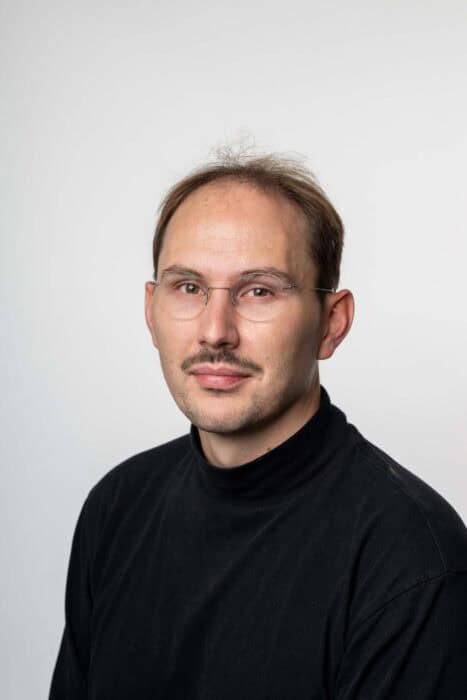
Lecturer of Global Terrestrial Water
Strategic Research Areas
I am passionate about understanding human-environmental system interactions and relations, how they change and evolve over time, and how reflexive science can inform more equitable and desirable outcomes in these systems across local to global scales. I am principally a freshwater scientist, with expertise in groundwater hydrology, groundwater-dependent ecosystems, remote sensing, social-ecological systems frameworks, geospatial data science, modelling in various forms (from process-based models to broad, interdisciplinary conceptual modelling), and sustainability science. I joined the University of Glasgow as Lecturer of Global Terrestrial Water in September 2026, following a joint postdoctoral research fellowship at UBC’s Institute for Resources, Environment, and Sustainability and Princeton University’s High Meadows Environmental Institute.
I am actively building my research group at Glasgow across a broad range of interests. These range from process-based ecohydrogeological models of groundwater-dependent ecosystem responses to depletion, land use change, and climate change; to freshwater resilience assessments within social-ecological system frameworks; to understanding the role of freshwater in broader human-Earth system functions and in achieving global sustainable development goals.
Students working with me would benefit by accessing, and having the opportunity to join, the broad research networks I have built and belong to: these include multi-institutional and international working groups on freshwater resilience (https://freshwatersystemsworkshop.org/), social-ecological system regime shifts (https://socses.org/activities/thematic-streams/), and Earth resilience (https://earthresiliencesustainability.org/).
I almost exclusively work on interdisciplinary research topics and projects. I would like to supervise students looking to understand how our shared water systems play important roles in flourishing communities, healthy ecologies, and a stable Earth system. Approaches could range from quantitative modelling and data science, to advancing and interrogating sustainability theory, to questioning and reframing how we study, manage, and govern water systems and their interactions, for example, by critiquing positivist worldviews and management frameworks and advancing relational, pluralistic understandings of water.
I am deeply committed to EDI. As a formally trained Water Resources (B.Eng.) and Civil (PhD) engineer, I was a core member of an initiative to systematically embed sustainability science, environmental justice, and EDI principles and learning outcomes across an undergraduate civil engineering programme in Canada (see our report on this initiative here: https://engrxiv.org/preprint/view/6835).